How Exporters Can Reach Buyers Who Don’t Search in English
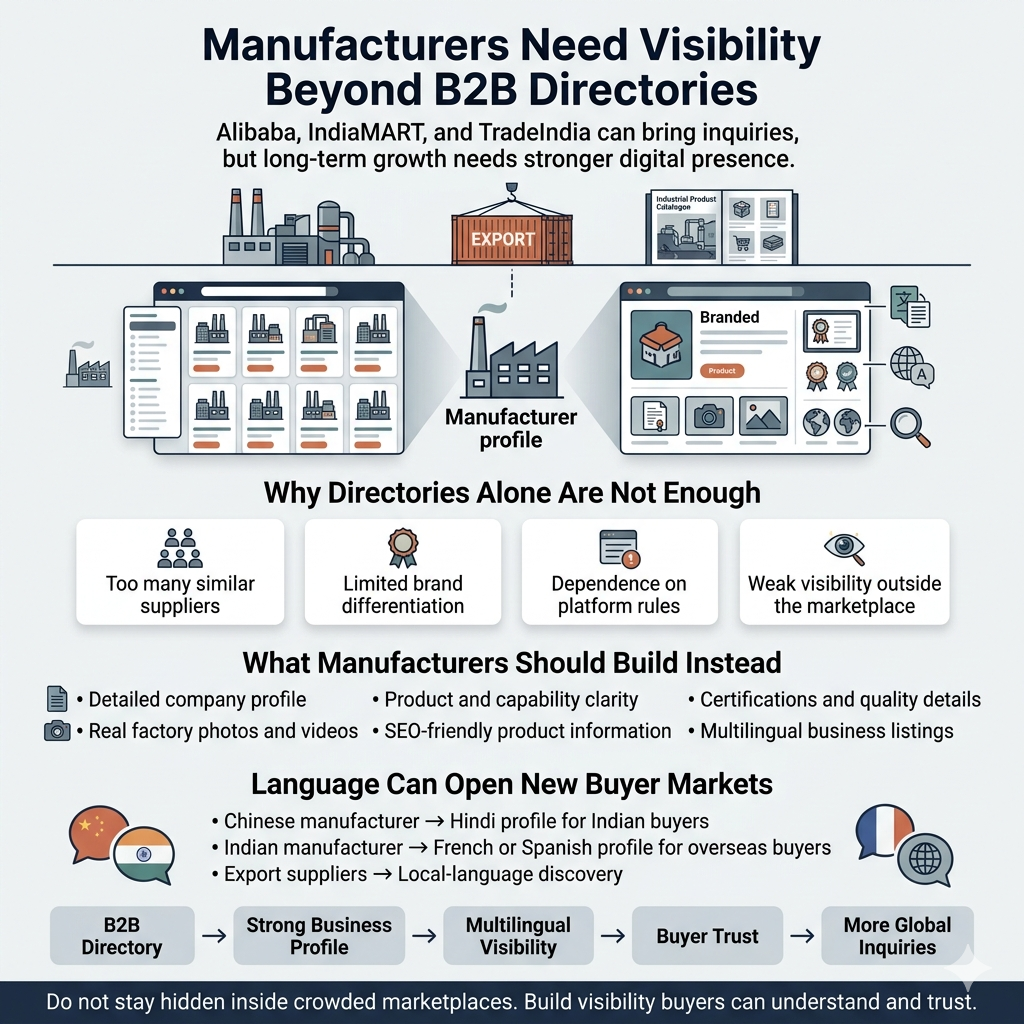
Your products may meet a buyer's needs before they even know your company exists. If they search in Spanish and your product details are only available in English, you could miss an opportunity to be considered. Sta...





Your products may meet a buyer's needs before they even know your company exists. If they search in Spanish and your product details are only available in English, you could miss an opportunity to be considered. Start with the language the buyer uses so they can discover your company earlier.
Even if people do find your listing, they will still need to understand it. Can they check the material, minimum order quantity, and delivery terms without translating each paragraph? Will they be able to pass on the information to the colleagues who have to approve the purchase?
Having a listing in the buyer's language can make the initial checks simpler for you. It gives buyers a way to evaluate your business before they start talking to you.
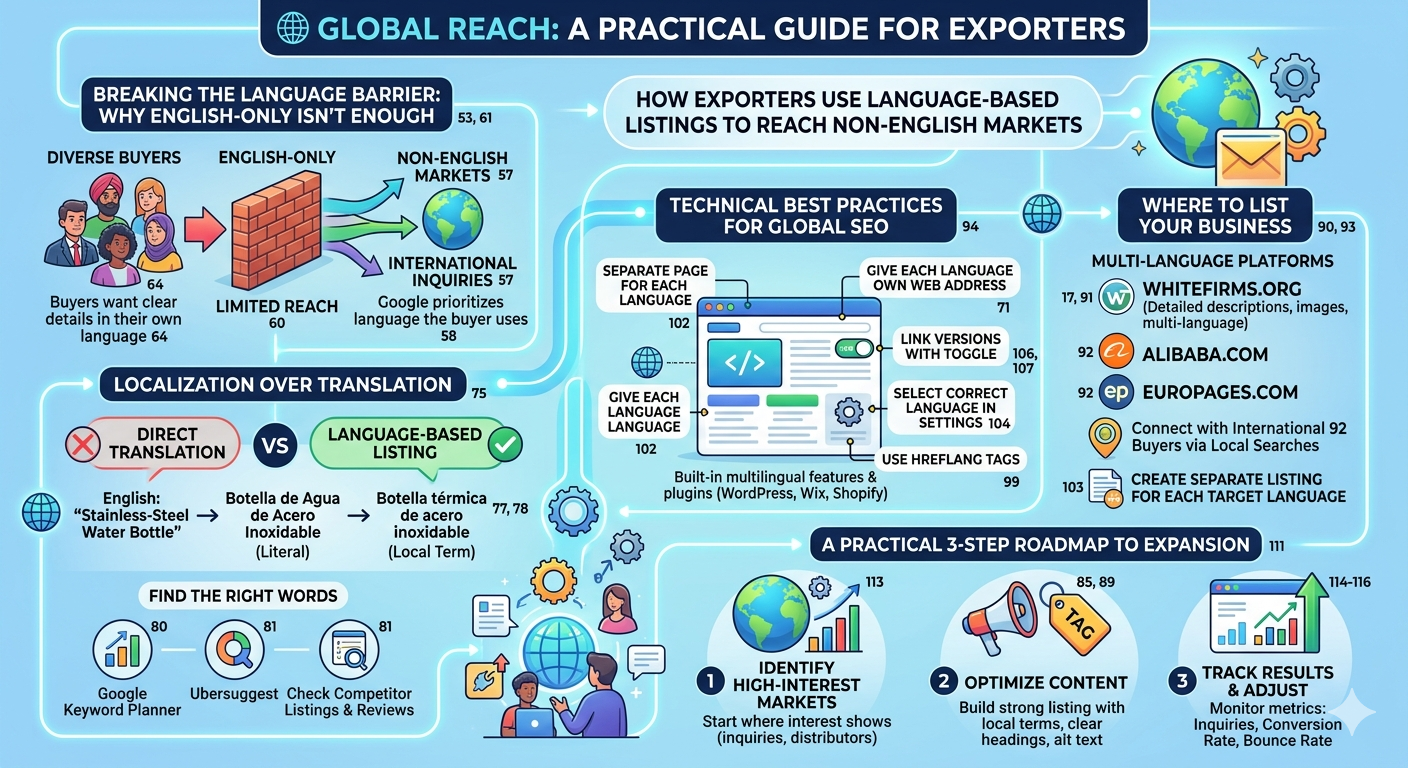
While English may work for negotiations, it isn't appropriate for all product searches; many buyers research in their own language before contacting suppliers.
An importer may feel comfortable corresponding in English while still preferring to research products in their own language, and the person responsible for finding suppliers may not be the same person who handles international purchases.
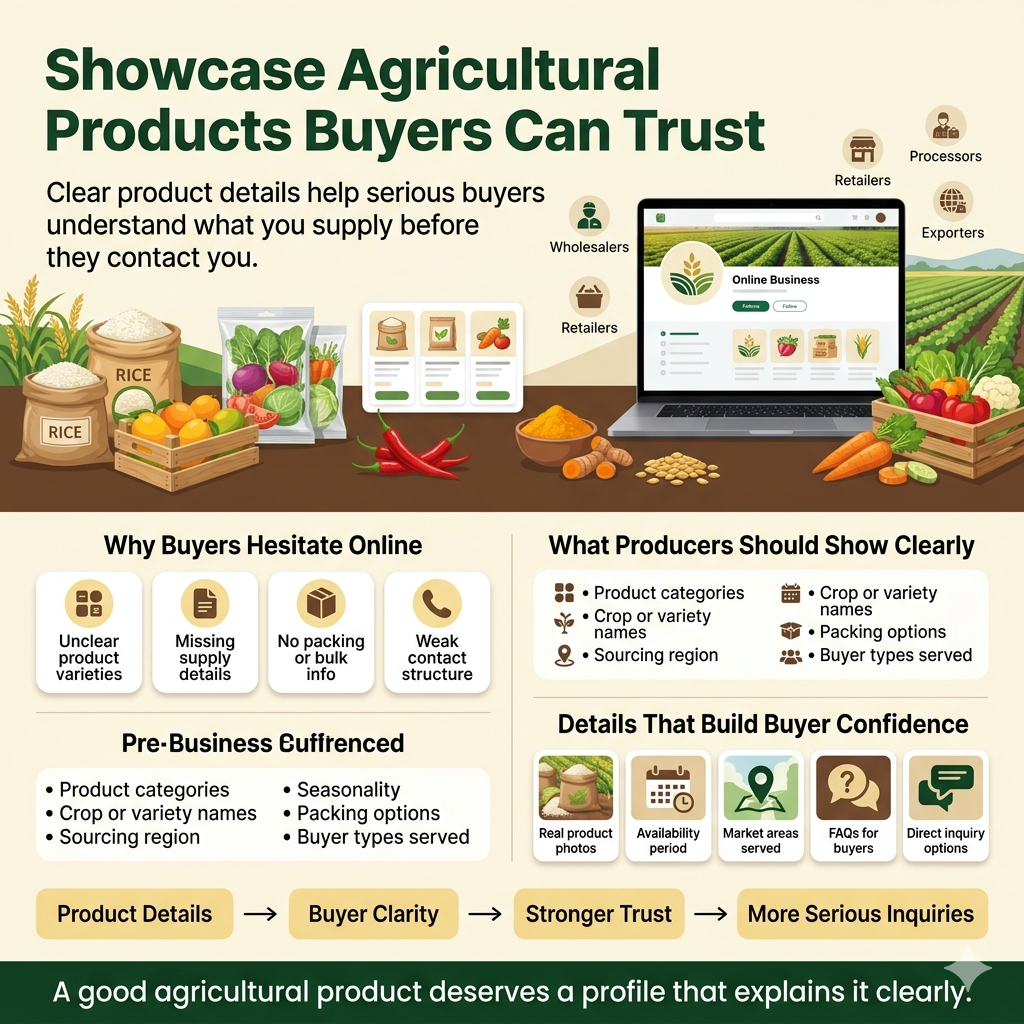
Suppose a company that supplies food packaging decides to enter markets where Spanish is spoken. A description that states "eco-friendly packaging solutions" raises many questions. For example, what are the containers made from? Are they suitable for hot food? What sizes are available? How many packages are in each carton?
A Spanish-language listing should use wording that buyers will understand to answer those questions. Simply translating a general sales pitch doesn't help someone decide whether the product meets their needs.
Start with a market you can serve
Before hiring anyone to translate, decide where you want inquiries to come from and whether you can fill orders there; start with that location.
You can choose a starting point by reviewing past inquiries, talking with distributors, and considering past shipments. Ask your sales team which markets come up most often in their conversations and what keeps those discussions from moving forward.
Now let's look at the practical aspects: can you meet the amounts that buyers ask for? Are your delivery costs reasonable? Can you furnish the documentation they request?
Language should include a realistic export plan; a translated listing won't handle discrepancies in price, product suitability, or supply capacity.
Before adding search terms, translate the product accurately.
A language-based listing is a business or product profile written for people who use that language, and it should present the facts while using common product names and industry terminology.
There is a significant difference between improving the way something is expressed and altering the product itself.
For instance, "stainless-steel water bottle" and "insulated stainless-steel bottle" refer to different features; in Spanish, the word "térmica" implies thermal performance and should be included only if the bottle actually has this function.
The same care applies to words such as “organic,” “compostable,” and “certified.” Have a translator familiar with your industry check the technical terms, and ask a distributor or local sales representative to flag any wording that sounds odd in everyday trade conversation. Use the questions that buyers already ask. A good place to start is your sales correspondence. If customers keep asking about carton sizes, sample availability, custom labels, or production times, answer these questions in the listing so potential customers get something more concrete than a general assurance of quality.
Give prospective customers something concrete: materials, grades, sizes, and available options. The minimum quantities that can be ordered and the available packaging options.The availability of samples and any related charges. The time it takes to produce something and the conditions that influence it.y The certifications that are relevant and the products or facilities that they apply to. The available customization options and the procedure for requesting a quotation. Make the timing more specific. The phrase 'ready to dispatch' is not the same as 'manufactured after order confirmation'. If transit time is separate from production time, then state that. Make sure all measurements, model numbers, and certification information match across every language version so customers get the same product specifications no matter which page they consult.ge version. Buyers should receive the same product facts, no matter which page they read.
Review how buyers describe the product.
Once you've established the facts, examine the language in local product catalogs, distributors' websites, and actual buyer inquiries. Identify any product names, applications, and specifications mentioned repeatedly, then use those terms when drafting your own wording.
Think of them as terms to investigate, not phrases to copy unthinkingly. A general search term might attract customers when you are looking for importers, while a specific term may fit one product variant but could misrepresent another.
Sharing a language doesn't mean people have the same buying habits. For example, an advertisement in Spanish may be understandable in several countries, but differences in terminology, shipping arrangements, and customer expectations can still exist.
When speaking to the buyer, use local expressions. Don't include country names or popular phrases to draw traffic.
Once you've established the facts, check the language used in local product catalogs, on distributors' websites, and in actual buyer inquiries. Identify any product names, applications, and specifications mentioned repeatedly, then use those terms when drafting your own wording.
Consider them as terms for investigation rather than as phrases to copy unthinkingly. A general search term might attract customers when you are looking for importers, while a specialized term may suit one product variant but could misrepresent another.
Sharing a language doesn't mean people have the same buying habits. For example, an advertisement in Spanish may be understandable in several countries, but differences in terminology, shipping arrangements, and customer expectations can still exist.
When speaking to the buyer, use language that is specific to the region. Don't include country names or popular expressions to draw traffic.
Give each language version a page buyers can find
For your own website, Google suggests separate URLs for each language version, since it determines a page's language based on visible content; translating only the menus while keeping product descriptions in English isn't enough.
Have your developer ensure each page version is accessible to search engines, add links so visitors can change the language, and include the appropriate hreflang annotations to indicate the corresponding versions. This will help Google to understand the relationship between the pages, though it does not guarantee that the pages will rank.
Ask the business listing platform whether it publishes translated profiles. Does each version have a separate, accessible page? Can you edit the technical details? Who is responsible for updating the translations when the specification changes?
Confirm the arrangements before you pay for translation or listing services, and make sure the contact process is clear before proceeding.
Be prepared for the next discussion, since a translated listing leads buyers to think they can contact you.
If your team only handles inquiries in English, respond politely and offer a clear process; for example, you could start with the buyer's language, arrange translation assistance, or connect them with a local representative.
Prepare replies to typical requests such as samples, quotations, packaging, and lead times, and have someone verify the translated commercial details before sending them, especially quantities, prices, and delivery commitments.
Keep the contact form straightforward. Ask for the product, quantity, destinatiThe fact that a listing has been translated leads buyers to think that they will be able to communicate with you.atIf the team of yours only attends to enquiries in English, then do so in a polite manner and provide a feasible procedure; for example, you could take the buyer's language as the starting point for their questions, arrange for translation assistance, or get in touch with a local representative.raPrepare answers to typical requests such as samples, quotations, packaging, and lead times, and have a person verify the translated commercial details before they are sent, in particular the quantities, prices, and delivery commitments.
The contact form should be simple. It should request the product, quantity, destination, and contact information needed for a meaningful response. tion, and contact details needed to respond meaningBegin by focusing on one primary language, and then check the response before widening it. If the questions are appropriate, proceed; if not, adjust them first. Keep a record of the inquiries that come through the listing, note what the buyers request, and track how many move on to quotations, samples, or orders. If you can, note the source in your sales records or inquiry form. You won't be able to tell whether the listing is reaching the right sort of buyers from the number of visitors alone. If you receive repeated inquiries below your minimum order quantity, the minimum order quantity may need to stand out more. If people ask about product features you don't support, the wording may be misleading. Unsupported product features may reveal misleading wording.
Use the conversations to improve the page, since a strong listing should help buyers understand what you offer, decide whether it meets their needs, and know what questions to ask next.
You do not need to publish in every language at once. Start where you can serve buyers well, explain the product accurately, make the first conversation easier, and review the inquiries you can fulfill. Then decide whether to expand or stop.