Build Local Search Strength Before Expanding into New Markets
A catering company can attract visitors from several countries and still struggle to get bookings in its own city. A moving company might publish dozens of articles while its service page leaves one basic question u...






A catering company can attract visitors from several countries and still struggle to get bookings in its own city. A moving company might publish dozens of articles while its service page leaves one basic question unanswered: does it collect from the customer’s neighborhood?
Traffic looks encouraging in a report. It means less when those visitors cannot buy from you or cannot work out whether you can help.
For businesses that depend on nearby customers, improving local search visibility is often a sensible place to start. It gives you a manageable market in which to test your service pages, learn what customers ask, and see which inquiries turn into paid work.
That advice has limits. An export manufacturer, an online tutor, or a software provider may have good reasons to target international customers from the beginning. They do not need to rank in their hometown first. The priority is to make the website work for the people the business can actually serve.
Find out why visitors are not contacting you.
Before commissioning more pages, look at the ones people already visit.
Are readers arriving at an advice article when you expected them to find a service? Are they searching from places you do not cover? Can they see your prices, availability, or quotation process? Does the inquiry form work?
Google Search Console can show the queries associated with your search appearances and clicks, along with the pages, countries and devices involved. This helps you investigate whether the traffic matches your intended audience. It does not, by itself, tell you whether a visitor became a customer.
Consider a hypothetical wedding photographer whose most visited article explains how to take better photographs with a phone. Those readers may have no intention of hiring anyone. A page about wedding photography packages in the photographer’s service area could attract fewer visits but be more closely connected to a buying decision.
The response should follow the finding. Irrelevant traffic calls for better targeting. Relevant visitors who leave without enquiring may need more information, a stronger reason to trust you, or an easier way to make contact.
Describe the service a customer is trying to buy
“Professional solutions for all your needs” gives a visitor very little to work with. What can they book? Where? What is included?
Imagine an office manager looking for a cleaning company. They may need evening cleaning, washroom maintenance, and a team that can enter the building after working hours. A page that repeatedly promises “excellent service” leaves those questions open.
If accurate, a more informative description would be:
“We provide evening office cleaning in Gurugram, including workstations, washrooms, and common areas. Contact us to arrange a site visit and discuss a cleaning schedule.”
The location belongs there because it helps the customer decide whether the service is relevant. Repeating the city name in every paragraph adds nothing to that decision.
Choose one important service page and check whether it explains who the service is for, what the work includes, where it is available, and how to request it. Add details from actual customer conversations. You are more likely to discover a missing concern there than in another list of promotional adjectives.
Make your location and availability easy to check
A customer should not have to compare three websites to find your current phone number or opening hours.
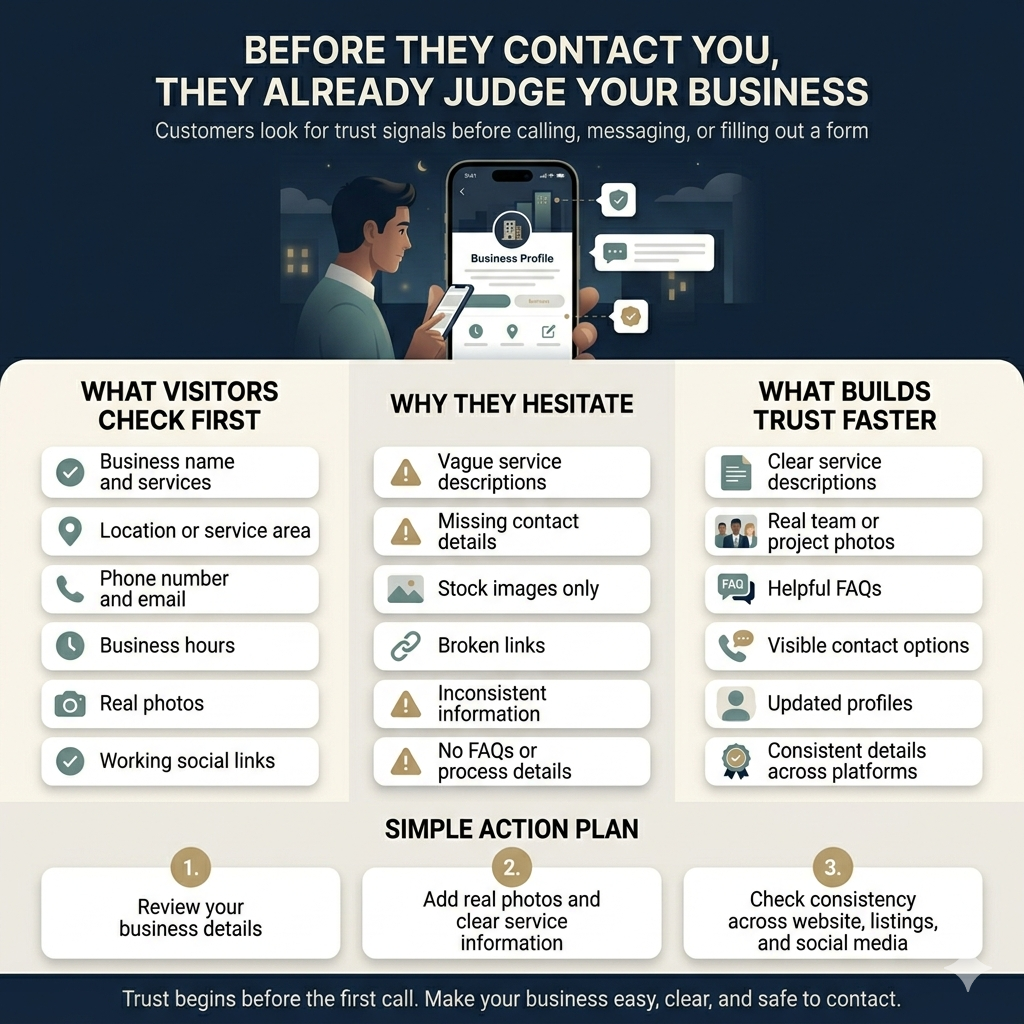
Review the business details on your website, Google Business Profile and the listings customers are likely to use—correct old addresses, disconnected numbers and misleading service information. If people visit your premises, include practical arrival details where needed: the building entrance, floor, parking arrangements or appointment requirements.
Google says local results depend mainly on relevance, distance and prominence—how well the business matches the search, how far away it is and how well known it is. Complete information helps Google understand your business, but it doesn't remove distance from the equation or guarantee a particular position.
For a business that travels to customers, explain the service area honestly. A moving company, for example, should distinguish between local household moves and long-distance routes it actually handles. A long list of cities is no substitute for telling someone whether you can collect their belongings on the route they need.
Use customer questions to guide keyword research.
Start with the language in your inquiries.
Someone may ask a caterer, “Do you provide staff and crockery?” A parent might ask a tutor, “Can you teach beginners online?” An office manager may search for cleaning services that operate after closing time.
These questions reveal what people need to know before they make contact. They can inform service descriptions, FAQs, and supporting articles without turning every sentence into a keyword phrase.
Compare those questions with the queries available in Search Console. If your page appears for a relevant search but barely addresses the subject, there may be a gap worth fixing. Search suggestions and competing pages can offer more ideas, but don't treat a suggestion as proof of strong demand or copy a competitor’s structure without considering your own customers.
Keep a short record of questions that repeatedly delay a quotation or booking. Answering them on the website can also help your team spend less time explaining the same basics.
Give every location page a reason to exist.
Creating a separate page for every town can seem like a quick way to reach more people. The problem comes when each page says the same thing except for the place name.
A separate location page makes more sense when it includes information specific to that area: a branch address, a local team, appointment availability, collection arrangements, or real examples of work completed there.
For instance, two tutoring centers might have different subjects, timetables, and teachers. Parents have a practical reason to compare those pages. A business serving several nearby neighbourhoods with the same team and service may be better served by one detailed coverage page.
Google’s spam policies identify certain substantially similar city or regional pages that funnel visitors to another destination as doorway abuse. That does not mean every location page is a problem. The question is whether the page serves the visitor or merely creates another entry point into the same content.
Show customers enough to assess your business.
People need something more concrete than a claim that your company is reliable.
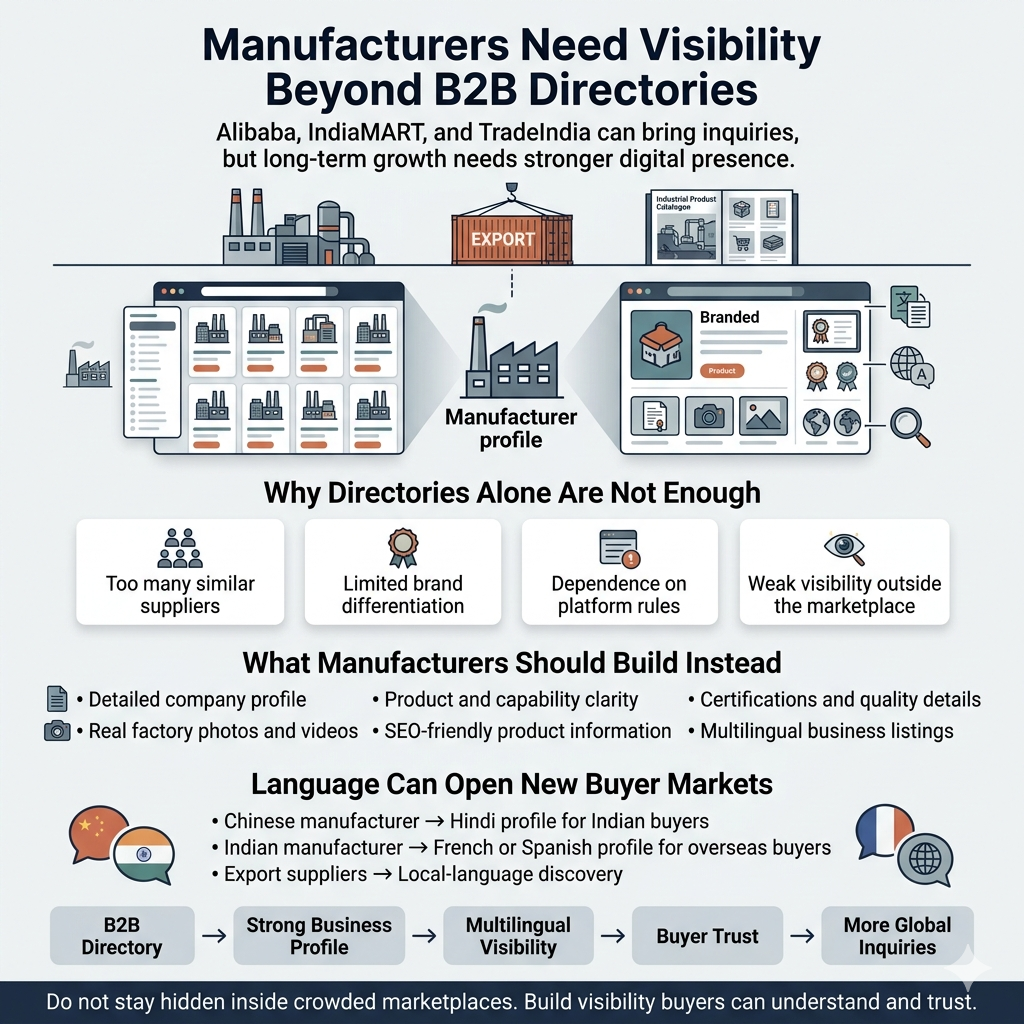
A wedding photographer can show complete galleries, explain coverage hours and describe the delivery process. A manufacturer can provide product specifications, current certifications where applicable, minimum order quantities and sample arrangements. A trainer can explain course content, teaching format and the experience required to join.
Use details you can substantiate. If a project involved a particular team, deadline or result, report it accurately and obtain permission before publishing confidential client information.
Apply the same judgment to business listings and external mentions. A relevant profile can help a potential customer discover and assess your company. Judge it by the audience it serves and the information it lets you present, rather than treating every backlink as equally valuable. Avoid buying links intended to manipulate rankings; Google includes that practice in its link spam policies.
Test the page as someone trying to book
Open your website on a phone and complete the action you expect a visitor to take.
Tap the phone number. Send a test inquiry. Try the booking calendar. Check whether a banner covers the contact button or whether a form demands information that customers cannot reasonably provide yet.
Google uses the mobile version of a site’s content for indexing and ranking. Keeping important service information available on mobile matters for search and for the reader.
Match the contact option to the purchase. A caterer may need the event date, venue, and approximate guest count to prepare a quotation. A manufacturer may need product specifications and order volume. Explain what to send and what happens next.
Only promise a response time your team can meet. A specific, dependable process sets better expectations than an enthusiastic promise followed by silence.
Expand when you can answer the next market’s questions.
Before adding another country or language, establish how you will serve those customers.
Can you deliver there? Who will answer inquiries in that language? Which currency will you quote in? Will customers have different support hours, delivery arrangements, or product options?
Take an online music tutor as an example. An international student may need lesson times shown with a time zone, payment instructions, language options, and an explanation of how online sessions work. Translating a page that only describes lessons at a local studio would leave the main questions unanswered.
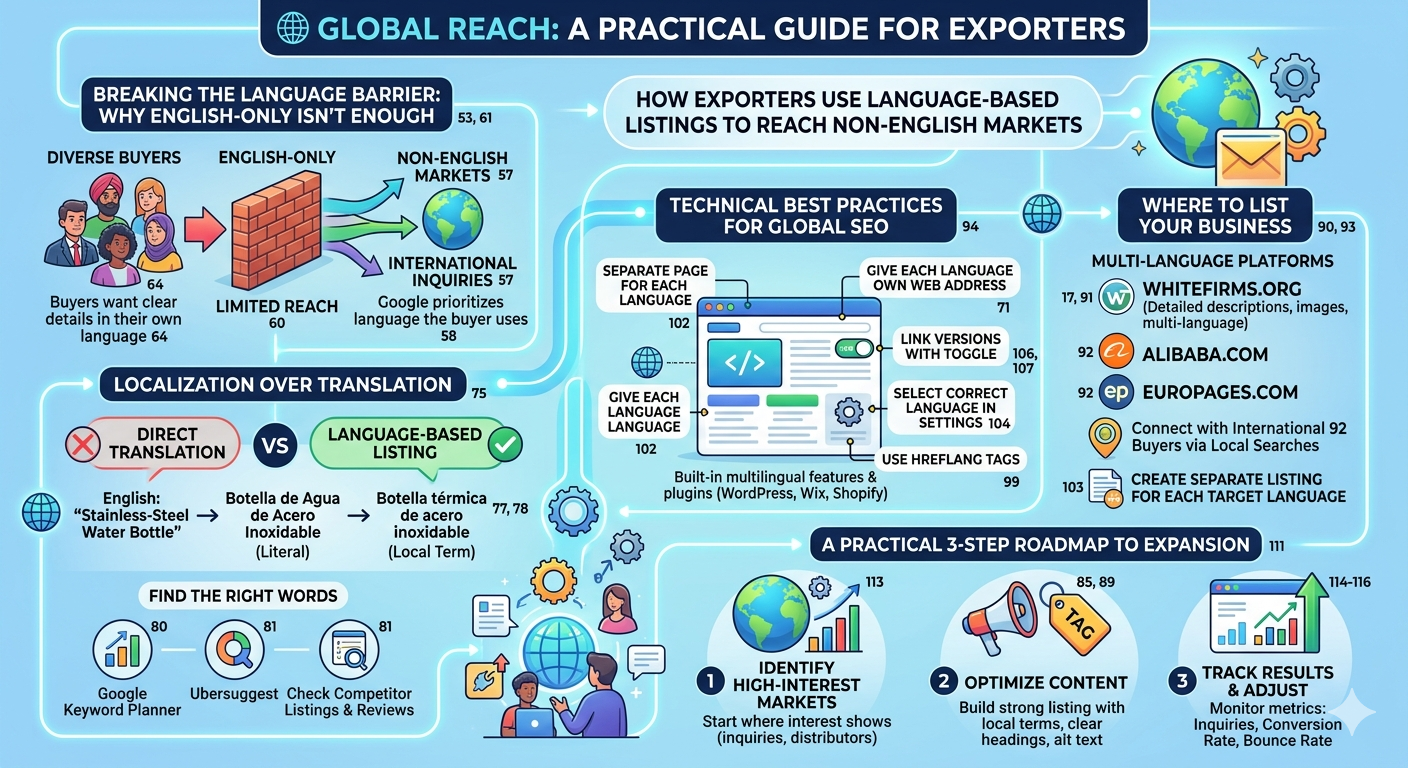
An exporter faces a different task. Buyers may need packaging details, sample availability, order quantities, and an explanation of how you quote shipping costs. Those details should reflect what the supplier can deliver, rather than assumptions about how everyone in a particular country buys.
Ask prospective customers what they need to assess your offer. Use those answers to decide which content needs adapting.
Organize multilingual pages so people can find the right version.
Google recommends separate URLs for different language versions. For example, English and Spanish content could sit under /en/ and /es/. These are language sections; they do not automatically represent separate countries.
Where equivalent pages exist in different languages or for different regions, hreflang annotations help Google identify the relevant alternatives. They do not translate the content or compensate for missing product and service information.
Give visitors an obvious way to switch versions, too. Someone may be traveling, researching on behalf of another office, or prefer a different language from the one associated with their location.
Keep the structure proportionate to the business. You need pages you can maintain accurately, with contact arrangements your team can support.
Measure whether visibility is bringing suitable inquiries.
Search appearances and clicks show part of the journey. Keep a separate record of the inquiries they help produce.
Note which service the person needs, whether they are within your coverage area, whether the request fits your business, and whether it becomes paid work. Ask how they found you when the source is unclear. A contact-button click signals interest, not a completed inquiry or sale.
For a local service business, the next step might be improving one service page, correcting an outdated profile, and fixing a broken booking form. For an exporter, it might be preparing one well-supported language version for a market already sending relevant inquiries.
Choose work that removes a real obstacle for your next customer. That gives your search investment a purpose beyond attracting more visits.