How Multilingual Websites Help Businesses Attract Better Inquiries
A buyer finds a product on your website and forwards the link to a colleague. The photographs look promising, but the colleague cannot confidently interpret the specifications. Elsewhere, a prospective customer unde...





A buyer finds a product on your website and forwards the link to a colleague. The photographs look promising, but the colleague cannot confidently interpret the specifications. Elsewhere, a prospective customer understands your service description but gets stuck on an untranslated booking form. Both situations leave a conversation unfinished before your team even knows it began.
A multilingual business website can help people assess your offer and contact you in a language they understand. Its value comes from answering the questions that influence a purchase, then making the next step manageable. Translation supports that work; it cannot compensate for an unsuitable product, unavailable service, or unanswered inquiry.
The practical aim is to attract people you can serve and help them explain what they need. That applies to an exporter seeking overseas distributors and a local business serving several language communities.
Choose a language around a real business decision
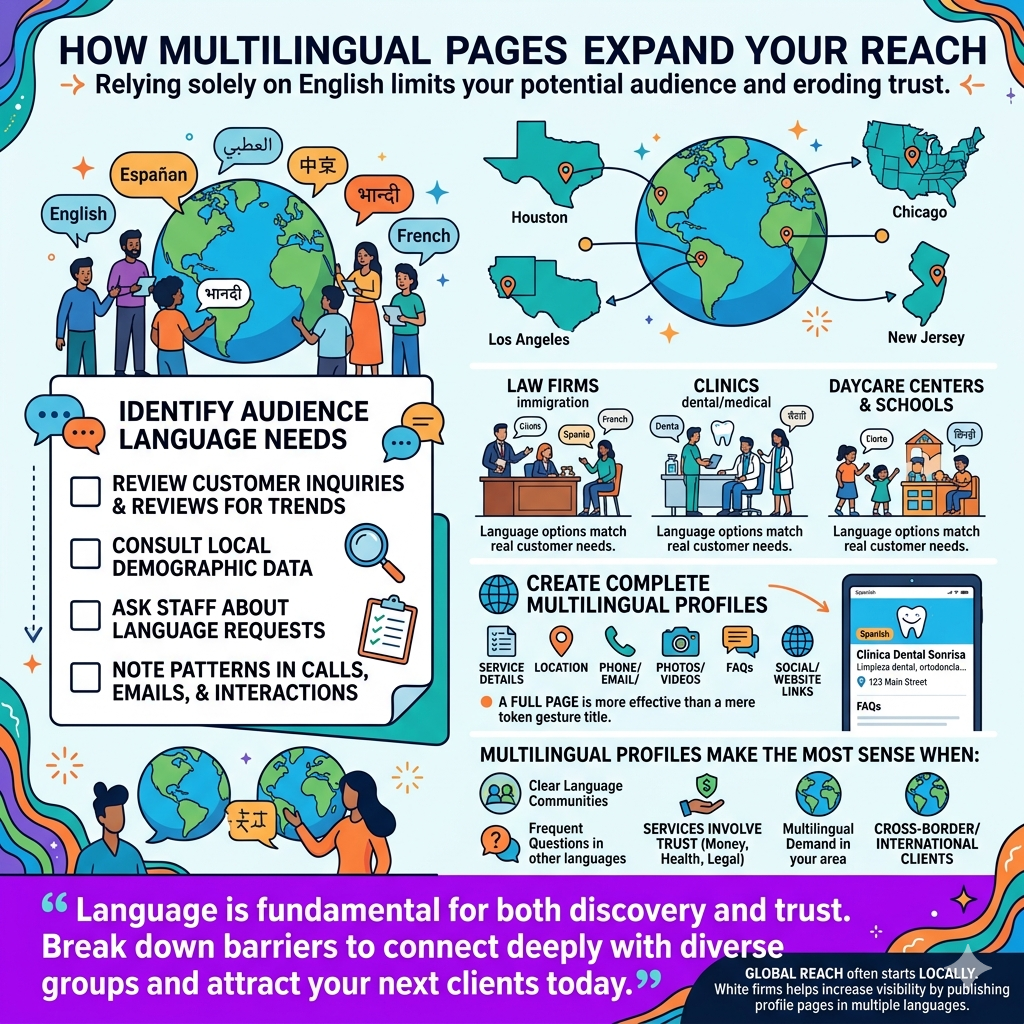
Start with the inquiries you already receive. Note which languages customers request, what they want to buy, and whether your team can fulfill those requests. Ask sales and support colleagues where explanations repeatedly become difficult.
Website data can add context. However, Google Analytics records browser or device language settings, which do not establish a visitor’s preferred buying language. Treat this as a clue to investigate alongside customer conversations, rather than a translation brief on its own. Google Analytics guidance
Existing traffic also leaves something out: people who have never found your business. If inquiries are scarce, speak with prospective customers, distributors or community contacts before concluding that another language has no value.
Then check whether you can support the audience. Delivery coverage, available appointments, payment arrangements and staff capacity matter as much as language demand. A few relevant requests from a market you can serve may justify a focused trial. Thousands of visits from somewhere you cannot supply may not.
Separate the language from the market
A French-language website does not necessarily target France. It might serve French-speaking customers locally or buyers across several countries. Decide which audience the page addresses before adapting its wording and commercial details.
For a hypothetical equipment supplier, a French product description could explain the same machine to multiple audiences. Installation, replacement parts, and delivery arrangements may still differ by destination. Those differences belong in the information buyers receive before requesting a quotation.
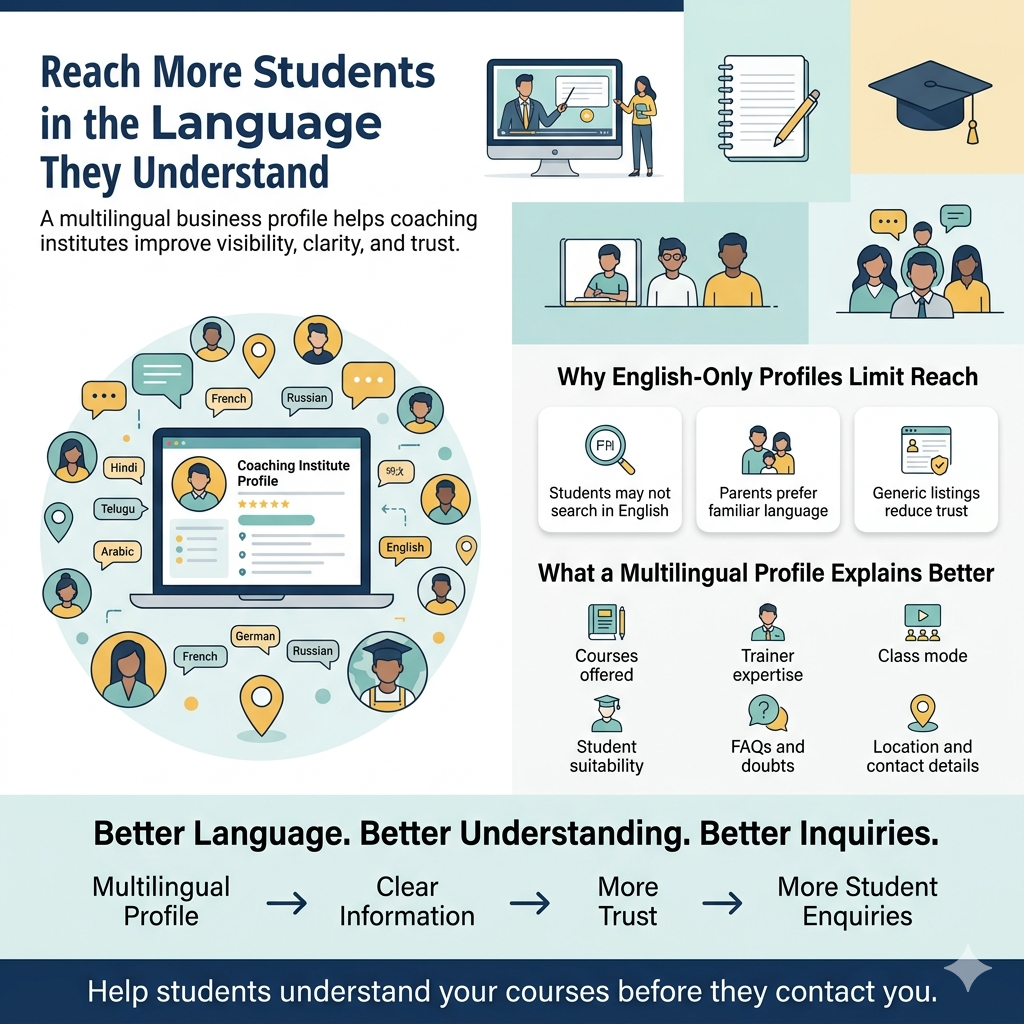
A local training provider has another task. It may explain courses in a parent’s preferred language while teaching the lessons in English. The website should distinguish the language of the description, the language of delivery and the languages available for support.
Avoid assuming that a translated page implies a local office, local stock or a fluent telephone team. State what exists. Where availability varies, give visitors a straightforward way to check their location or requirements.
Translate the route to an inquiry first
You rarely need to translate every archived article before serving another audience. Start with the pages and instructions a customer needs to decide and contact you.
A manageable first release could cover:
One important product or service page, including specifications or scope.
Delivery coverage, service locations and availability.
Relevant pricing information or an explanation of how quotations work.
Answers to questions that commonly delay a decision.
The inquiry form, its error messages and the submission confirmation.
Follow any links those pages depend on. If a product page sends readers to a brochure containing essential dimensions, translate the relevant information or clearly identify the brochure’s language. Do the same for booking calendars and payment instructions.
Prioritize a complete route through one offer. Publishing several translated introductions while leaving every practical step unfinished gives visitors more reading without helping them proceed.
Give buyers enough information to assess the offer
Before translating, remove ambiguity from the original content. “Flexible service” could mean adjustable appointment times, custom packages or something else entirely. A translator should not have to guess what your business intended.
For products, explain the available variants, specifications, order quantities, packaging and production or dispatch arrangements. For services, identify who the service suits, what is included, where it is available and what the customer must provide.
Consider a hypothetical furniture wholesaler. “Worldwide delivery and excellent quality” leaves retailers with unanswered questions. Details about materials, carton dimensions, minimum quantities, sample orders and destinations served would give them a better basis for a conversation.
Distinguish facts from conditions. An item available from stock has a different timetable from one manufactured after approval. An estimated delivery period should state when the estimate begins and what still needs confirmation.
Include relevant photographs, drawings or demonstrations where they help someone evaluate the offer. Translate captions that explain product options, and keep any claims consistent with what the images actually show.
Use the terms customers recognize
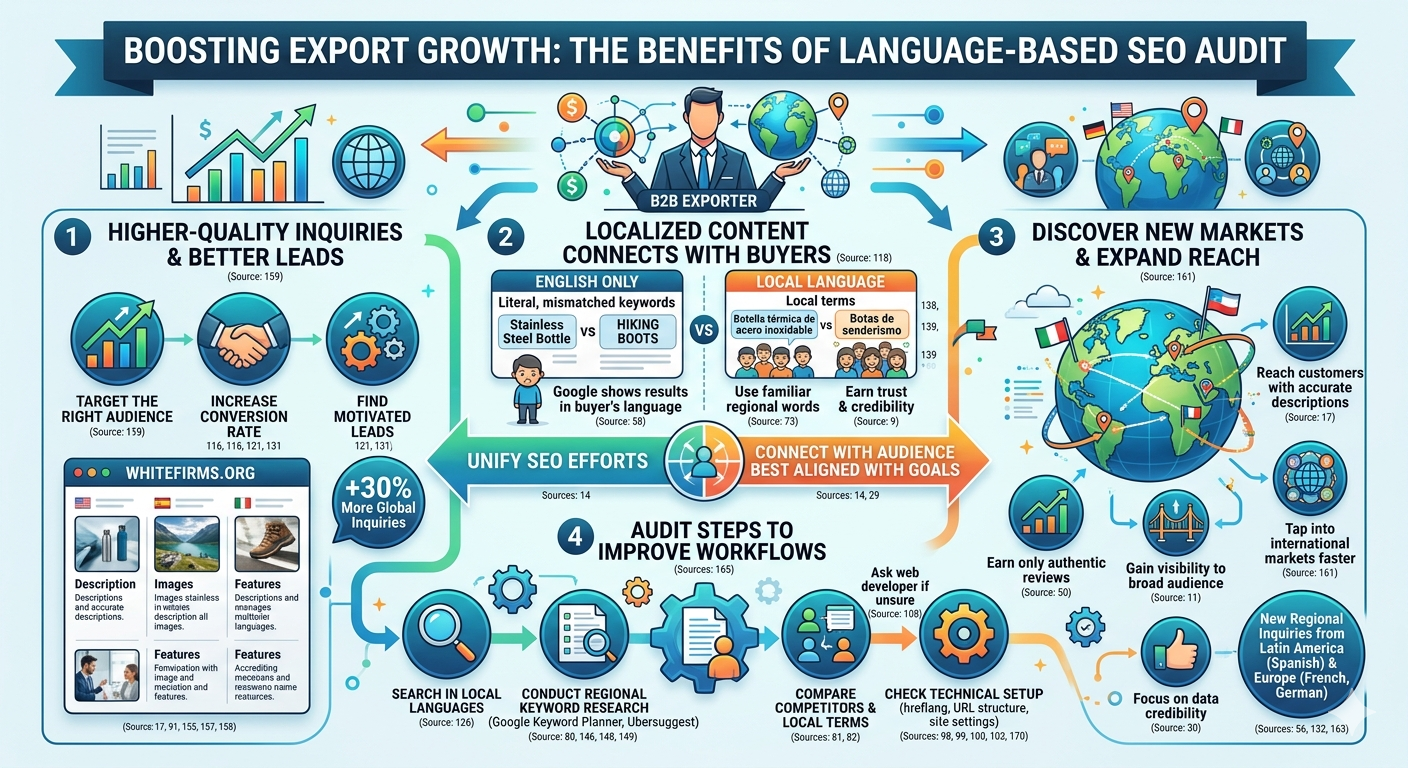
Accurate translation requires attention to the subject as well as the language. A familiar dictionary equivalent may be an unusual product name in the market you want to reach.
Review buyer inquiries, distributor catalogs, and local industry websites to understand common terminology. Ask an industry-aware translator to distinguish everyday wording from technical terms that must retain a precise meaning. Popularity alone is a poor reason to use a phrase that describes the wrong product.
Prepare a short terminology sheet covering product names, model numbers, approved claims and words that need consistent treatment. Preserve measurements and specifications carefully; if you convert units, check the calculation and appropriate precision.
Automated translation can help prepare a draft, but assign someone qualified to review it before publication. Concentrate attention on details where an error changes the purchase: quantities, exclusions, prices, guarantees, and delivery commitments.
Give the reviewer context, including images and explanations of the actual service. Fluency alone doesn't show whether a technically plausible sentence accurately describes your business.
Make each version accessible to visitors and search engines
Google recommends separate URLs for language versions, rather than changing a single page only through cookies or browser settings. It also recommends allowing visitors to choose their language instead of automatically redirecting them. Google Search guidance
For a small business, language folders such as example.com/en/ and example.com/fr/ can keep the versions within an existing website. Other approaches include subdomains and separate country domains. Choose a structure your team can maintain, considering whether markets need different products, prices, or operating arrangements.
Ask your developer to implement hreflang annotations for matching language or regional pages. These identify alternatives; they do not translate the content. Each version should reference itself and its relevant alternatives, with reciprocal references. Google supports implementation through HTML, HTTP headers, or sitemaps. Google hreflang documentation
For the visitor, the essential check is simpler: switching languages on a product page should lead to that product’s equivalent page. When no equivalent exists, explain the gap instead of silently sending someone elsewhere.
Test the parts that translation reviews can miss
A document review cannot show whether a longer translated label disappears inside a narrow button. Test the published pages on a phone, including navigation, forms, and confirmation messages.
Ask a reader of the target language to complete a specific task without coaching: find the relevant service, check availability, and submit an inquiry. Watch where they pause. A question about which field to complete may reveal a design problem rather than a translation error.
Check that forms accept international phone numbers and the names or address formats your customers use. Avoid making a domestic postal code mandatory for an overseas quotation request. Where dates could be misunderstood, spell out the month; for appointments, identify the time zone.
Your developer should also declare the page language correctly in HTML. This helps tools such as screen readers process the text appropriately. W3C language guidance
If you publish Arabic or another right-to-left language, include someone experienced with that layout in the review. Check mixed text, especially phone numbers, email addresses and product codes.
Prepare your team for the first reply
A translated website enables contact; your response determines whether the discussion continues. Decide who receives each language’s inquiries and what help they have to interpret them.
Where responses are available only in English, say so near the form. If translation assistance is available, explain how it works without promising immediate conversations your team cannot support.
Request the information needed for a useful reply. A supplier may need a product reference, quantity, and destination. A consultant may need the type of support requested and the customer’s location. Keep optional background questions optional.
Prepare reviewed responses to recurring questions, and check the details of every request before sending. A template should save typing, not substitute for reading.
Set a response window your team can meet and name the time zone when relevant. Assign ownership so an inquiry does not sit between departments while each assumes someone else will answer it.
Keep translations accurate after launch
The translation budget should include maintenance. A page that was accurate at launch can become misleading when a fee changes or a product is discontinued.
Assign an owner to the language versions and track the pages, their last review dates, and any changes awaiting translation. When the original changes, flag affected versions as part of the same publishing task.
Separate wording changes from offer changes. Correcting a spelling mistake is different from increasing the minimum order quantity. Commercial changes deserve prompt review across every page, brochure and saved reply where the old information appears.
Business listings need the same attention. Before using a multilingual directory, check which language options it actually supports, who can amend the content, and how inquiries reach your team. Keep its description aligned with your website. A listing can introduce your business, but it cannot keep an outdated quotation policy accurate for you.
Measure whether the inquiries are a better fit
Define a suitable inquiry before assessing results. Depending on the business, that could mean someone in your service area, seeking a product you supply, with an order size or timetable you can accommodate.
Record the page or language version associated with the inquiry where possible, then follow its progress through quotation, booking or sale. Ask customers how they found you when the source is unclear. Keep completed inquiries separate from clicks on a contact button.
Compare outcomes with the time spent reviewing translations and answering messages. A version producing fewer inquiries may still be valuable if those conversations fit the business and progress further.
Avoid declaring success or failure after a handful of visits. Allow for the normal buying cycle and changes in advertising, availability, or pricing. If results disappoint, investigate where people stop: discovery, understanding, form completion, or your team's response. Language may be one cause, but it's not an explanation for every lost sale.
Start with one offer and one complete customer journey
Choose a product or service that already generates relevant questions. Gather those questions, confirm the facts, and prepare one language version for an audience you can support.
Before publishing, check that a prospective customer can:
Identify the offer and judge whether it fits their requirements.
Confirm location, delivery or appointment availability.
Understand the costs or quotation process and important conditions.
Complete the inquiry without untranslated instructions.
Know which language your team will use and what happens next.
Have someone from the intended audience try that journey on a phone. Fix the obstacles they encounter, then assign responsibility for the replies and future updates. Use the resulting conversations to decide what deserves translation next.