How Music Teachers Can Attract International Students for Online Lessons
A potential student sees your performance video and goes to your profile. Although they like your music, they aren't sure whether you teach beginners, what language you use, or whether your available hours match the...






A potential student sees your performance video and goes to your profile. Although they like your music, they aren't sure whether you teach beginners, what language you use, or whether your available hours match their schedule, so they decide not to ask.
This is a booking problem that your playing ability alone can't solve.
If you want to attract international students, your website should clearly show which lessons people can book. First, it should help students find an appropriate teacher; then it should show the practical arrangements; and finally, it should let them get a feel for your method before committing long term.
Start with a specific teaching offer, then make the path from discovery to attending the first lesson as simple as possible. It makes sense to provide more exposure once interested learners have enough information to take the next step.
Choose the students you can look after effectively.
The statement "music lessons for all ages and levels" raises a number of questions for a potential student.
The explanation required by an adult beginning to learn the piano, by a parent who wants singing lessons for their child, and by an experienced guitarist interested in improvisation will differ. Yet if you teach more than one group, the information must be relevant to each one; therefore, move from one audience to the next, making the distinctions clear.
Define your offer through:
* The musical instrument, musical style, or vocal tradition.
* The ages and the level of experience that you teach.
* The language employed in the lessons.
* It doesn't matter if the sessions are individual or take place in groups.
* The goals that you can support.
For example, an illustrative description could read:
We provide individual online lessons for adult beginners in English, focusing on learning to read music, building basic technique, and playing pieces related to your interests.
When teaching Carnatic singing, make it clear by naming that particular tradition rather than depending entirely on the term 'Indian classical music'. If you are preparing students for exams, state the examination boards and levels you support, without suggesting any affiliation you do not actually have.
Select markets that correspond with your teaching hours.
You don't need to be available all day and all night for international teaching.
Start by looking at how many hours you can work each week. Then consider which of those hours suit the kind of students you want to teach. For instance, an evening that works for an adult might not suit a school-aged child in another location, so match your availability to the market you've chosen.
Make realistic arrangements regarding availability and clearly differentiate between occasional flexibility and a regular weekly opening. Once you've done this, agree to let a student continue with the arrangement only after confirming it.
When sending calendar invitations, include the time zone. Although Google Calendar supports event time zones and shows events according to the viewer's settings, both sides should still verify the confirmed appointment. Google Calendar Help
For repeated lessons, agree on the local time used in the booking. Daylight saving changes can affect the time difference between two places, and countries do not adjust their clocks on the same dates.
Before making those changes, recheck the affected bookings. Do not give vague confirmations such as "Saturday at six" without including the date, the time zone, and whether it is morning or evening.
Demonstrate how you teach.
The clip demonstrates musical ability, while the teaching demonstration gives prospective students different information—how you explain, listen, and guide practice. Together, these two aspects help the audience move from admiration to understanding.
Select a topic within your capacity; for example, you could show off counting a rhythm, locating keys on the keyboard, or improving a chord change.
Tell them what the task is, show them how to do it step by step, and advise them on what to observe. Include a short activity they can do. When teaching beginners, define any new terminology before using it.
You can make the usual error yourself; therefore, there's no need to film a student. Include captions together with a brief written explanation so that the key point is still easy to understand without sound.
Put the demonstration next to the relevant lesson description so someone watching a beginner guitar exercise can easily access your beginner guitar lessons.
Do keep the performance videos, but assign a purpose to each one. A series of impressive performances doesn't show what studying with you would be like, so make the connection to teaching clear.
Explain progress without promising a specific outcome.
Students want to know which lessons will help them reach their goals. To make this clear, convert your syllabus into practical learning activities so the lesson plan flows smoothly from topic to application.
Rather than merely giving a list of scales, exercises, and theory, explain how the students will make use of them: for example, by keeping a steady pulse, reading a short passage, accompanying a song, or preparing a selected repertoire.
Avoid statements like "play three songs confidently in eight weeks," since progress depends on starting ability, practice time, attendance, and the difficulty of the music.
Describe your initial teaching focus instead:
The early lessons focus on basic technique and rhythm, include short pieces appropriate for your initial level, and we check your progress, then modify the pace as you advance.
What takes place between lessons? Will the students get written practice notes? Can they send in a recording? Will you provide feedback, and if so, how often?
Set limits on that kind of support, since promising unlimited help can create expectations that are hard to keep up with if your student numbers increase.
Make the opening lesson have a clear objective; since it is the first lesson, both sides should be able to evaluate the arrangement, so you must state its duration, cost, and details before anyone books.
The initial lesson should give both people an opportunity to evaluate the arrangement; therefore, you must explain its duration, cost, and details before anyone books.
Tell them about the length, price, and contents before booking; the free introductory session is optional and not necessary. Instead, a paid assessment can be arranged provided that the students know what they are going to get.
Depending on the learner, the session might include:
* Talking about one's musical hobbies and past experience.
* Checking the instrument and the online setup.
* If the student is already playing, hearing a short passage.
* Teaching a suitable exercise.
* Suggesting a first learning plan.
Tell complete novices whether or not they need to do any preparation, and if you ask them to 'play something' without explaining why, the introductory session may end up resembling an audition.
As a practical suggestion, identify the first areas to focus on, specify the appropriate lesson length, and state what equipment will be required. Then book the next available session without pressuring anyone to buy a large package before they understand your teaching, and end the process with a clear next step.
Include sound and camera setup in your service.
Music settings may need to change for a call to be suitable for conversation, so include sound and camera arrangements as part of your service.
The "Original sound for musicians" feature on Zoom keeps more of the microphone input by turning off noise suppression. While this can help with instrumental and vocal sounds, it also means you must account for background noise. Rather than assuming one setting will suit everyone, test the setup in your space.
Prepare a brief guide outlining the essentials: the instrument, a stable device position, an internet connection, and the camera view. Distinguish between essential items and optional upgrades so beginners don't think they need to buy expensive equipment right away.
Make sure you can see the movements required by the instructions; a camera focused on the keyboard should show the hands clearly, and one showing the guitar should show the correct hand positions and the instrument.
Prepare a plan for taking turns and for carrying out the demonstrations. Since internet delay can make it difficult to play together, it is advisable to test simultaneous performance before including it in your lesson promise. Specialized audio modes also have extra features. Decide what should happen if the connection fails or sound issues make the session impractical.
Make the publication fees and booking terms available before payment so an interested student knows exactly what the advertised fee includes and the booking process is clear from the start. A student should understand what the advertised fee covers, the lesson length, and whether the payment is for one session or a package. You should also explain what is included, for example, practice notes or feedback agreed upon between lessons. When you offer package deals, state the conditions under which they expire and explain how you handle unused lessons.
You should give clear, simple explanations about cancellation, rescheduling, teacher absence, and missed lessons. The Independent Society of Musicians' guidance on private tuition covers lesson scheduling, fees, missed lessons, and lesson termination, and should be handled in writing. Since the society's resources are based in the UK, they should not be assumed to apply everywhere. Make sure the payment method you use suits the students you want to enroll. Also, make sure the charges you control are visible, and note that your payment provider may add currency-conversion charges. If regular lessons require a suitable instrument at home, tell the student before they pay. Finding out about this requirement later creates an avoidable problem.
When teaching children, it is important to make parents' role clear. For lessons to proceed, parents or guardians should receive practical information and a description of your musical background, starting with agreed expectations. For children's lessons, parents or guardians will need practical information and a description of your musical background. Clarify who handles bookings, describe how you communicate during lessons, and state whether you need adult help with equipment or practice. For younger learners, also check whether an adult should stay nearby. Use professional teaching accounts and agreed communication methods.
The Independent Society of Musicians suggests obtaining written agreement from parents when giving remote lessons and making specific arrangements for accounts, lesson settings, and recordings. ism. Recording a lesson for use in private teaching and publishing a student's performance are two distinct things. Explain the purpose for which you will use them and get the necessary permission before taking either action. Do not assume that consent given for one situation extends to another.
Provide an accurate description of the qualifications and background checks, including their scope where appropriate, so parents know exactly what has been checked. Build these arrangements into your teaching process from the beginning, rather than waiting until a problem comes up and then making up solutions. Convert booking information into clear, practical details. A student who knows some English might prefer to have fees or lesson requirements in a different language.
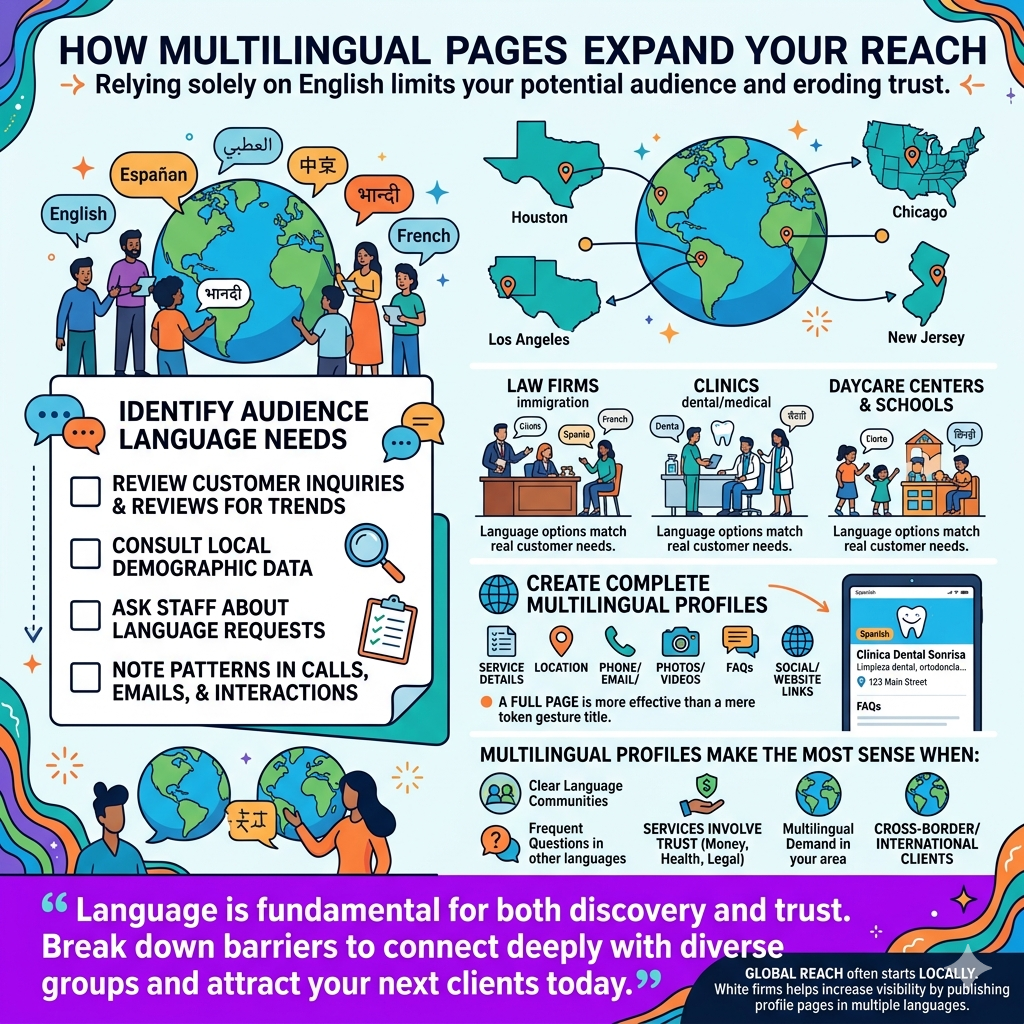
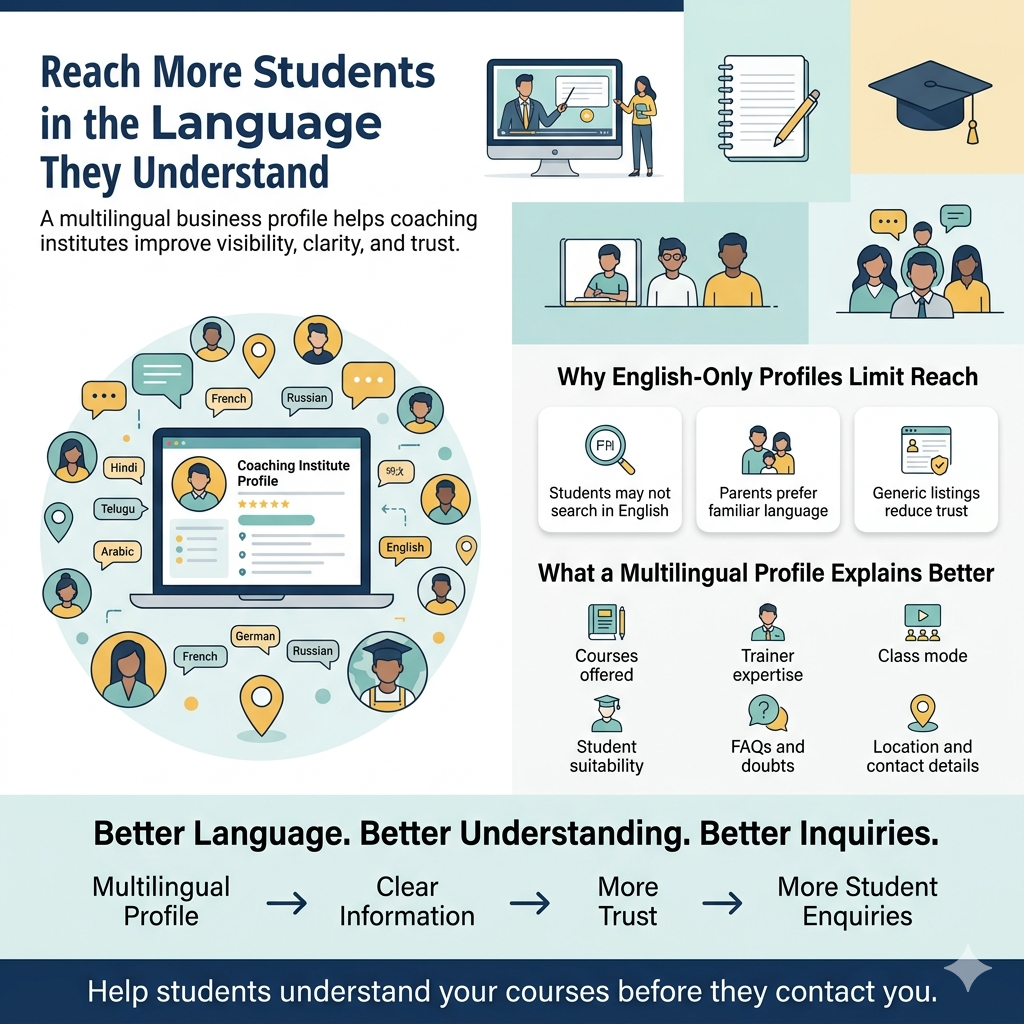
A parent arranging the lessons may have language needs that differ from the student's. Select translations based on the students you can reach, and ask current families what information they would like in another language. Start with a lesson description, details of the introductory session, fees, availability, and how to book; then have someone who knows both the language and the musical terminology review the wording. State the language that you use for teaching on its own. A profile written in Spanish should not be taken to mean that you teach in Spanish unless you actually do. Google suggests that for a multilingual website, use separate URLs for different language versions, along with annotations that identify the related pages.
Make sure the translated information is up to date if prices or policies change. Translation requires ongoing maintenance; it is better to have fewer accurate pages than many neglected versions. Encourage classes where the right students can evaluate you. Select several channels you can maintain consistently. You can use a teaching directory to show your qualifications and availability, while a video channel can illustrate your method. Moreover, appropriate community groups may introduce you to people looking for a specific musical tradition, as long as you follow their rules.
Before joining a marketplace or directory that charges fees, check what it offers, how the booking process works, and what restrictions apply.
Publish material connected to the students you want:
* A beginner’s guide to getting ready for your first online lesson.
* A quick workout for someone returning after a long break.
* Here is an explanation of the way your group lessons work.
* An example of a subject falling within your area of teaching.
Use descriptive language that matches the offer. The phrase "Online violin lessons for adult beginners" provides more context than "Start your musical journey."
Send each post to the correct lesson page. Make sure that your teaching focus, fees, and contact information are the same on all your profiles. Ask satisfied students for honest recommendations without making scripted statements about results.
Remove obstacles from the booking process.
Try your website on a phone as though you had never seen it before.
Can you locate the lesson description, watch the demonstration, check the price, and find a suitable time? Does the booking button make its function clear?
The phrase "Book an introductory piano lesson" sets a clearer expectation than "Get started."
Keep the first inquiry form simple by asking for the learner's instrument or area of interest, experience level, time zone, and scheduling preferences. When appropriate, ask for more information. For a child, ask the parent or guardian to make the inquiry.
Finish the test submission and make sure the message gets through. Check the confirmation page and also the email.
When the calendar is full, replace the booking invitation with a correct waiting-list or availability message; advertising lessons that aren't available wastes both the student's and your time.
Track which inquiries become regular lessons
More messages may be positive, but that doesn't prove your promotion is attracting the right learners.
Keep a simple record of where inquiries come from, what people want to study, whether they book an introductory lesson, and whether they continue.
Explain why suitable prospects don't move forward; if the ongoing problem is your schedule, another rewrite won't solve it; if students keep misunderstanding your teaching language or the fees, change your profile.
Ask new students why they chose you; their answer could be a demo, a recommendation, a specific musical interest, or convenient lesson times.
When lessons start, decide on a practice focus you've agreed on, then review it in the next session. This ensures that the continued teaching experience matches the promise that was made to attract the begin by selecting a particular type of lesson and a realistic kind of audience; then update the description, include a teaching demonstration, set out the feasible hours, and test the booking process. Before investing more money in attracting visitors, closely review what happens at each stage. Visitors.